How Long Does a Fence Last in Western Washington?
The honest answer depends far less on the material you can see and far more on the six inches of post sitting at the soil line. Two identical cedar fences on the same street can be ten years apart in lifespan depending on how their posts were set.
That said, anyone planning a project needs real numbers. Here is what we actually see across Tacoma, Lakewood, Puyallup and the rest of Pierce County.
Realistic Lifespan by Material
| Material | Typical lifespan here | What ends it |
|---|---|---|
| Cedar (privacy or picket) | 12–20 years | Post rot at the soil line |
| Pressure-treated pine | 10–15 years | Warping, then post failure |
| Vinyl | 25–30+ years | Impact cracking, rarely age |
| Galvanized chain link | 20–30 years | Fabric sagging, top rail damage |
| Powder-coated aluminum or steel | 30–40+ years | Coating damage, then corrosion |
Notice that the two longest-lived options are the two that cannot rot. In a climate like ours that is not a coincidence.
Why Our Climate Is Different
People assume fences fail here because of storms. Storms finish fences off, but they are rarely the cause. The cause is duration.
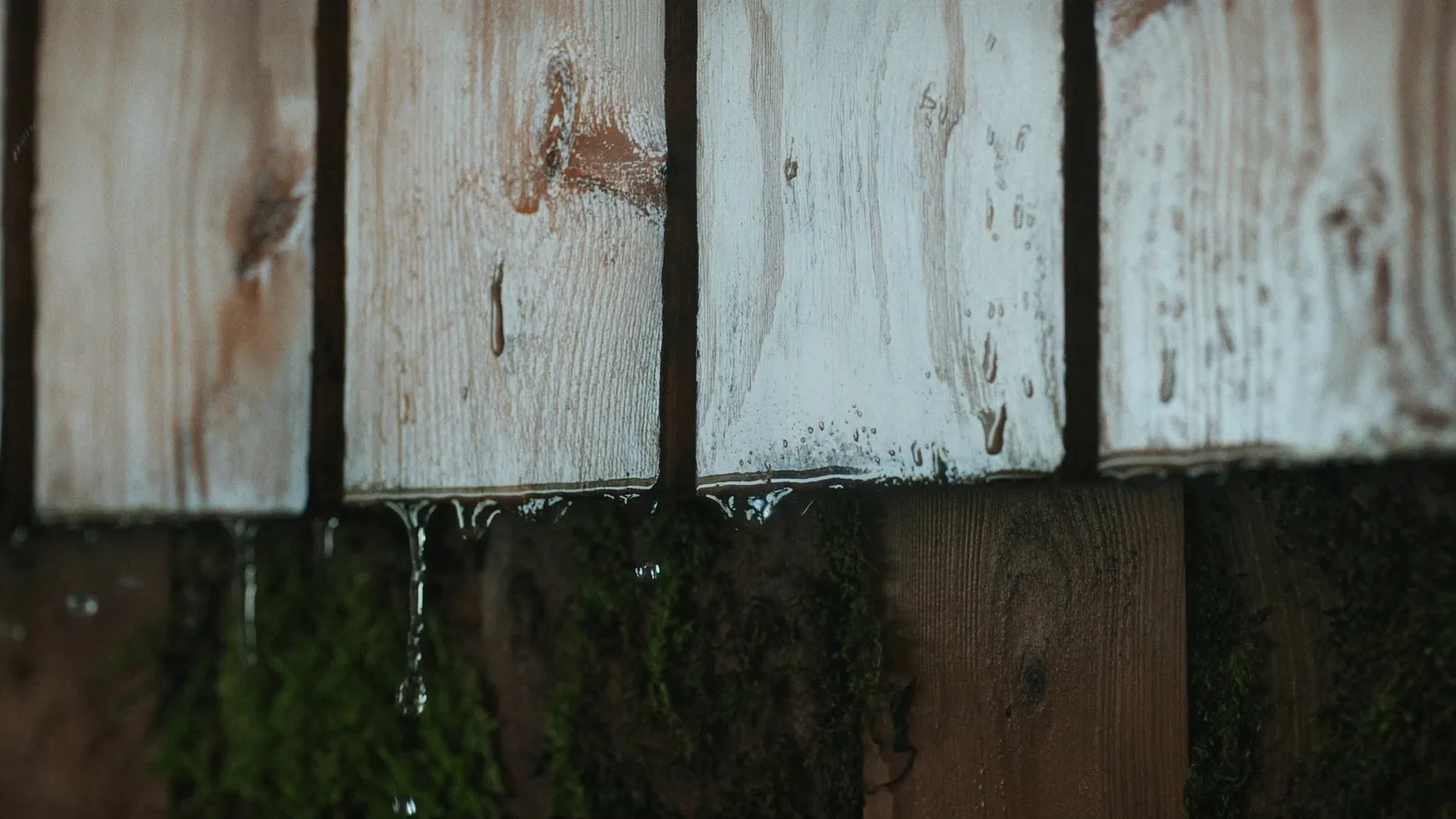
A fence post in Pierce County spends roughly nine months a year in soil that never fully dries. Wood needs a chance to dry between wettings to resist decay, and when it never gets one, the buried section stays in the moisture range where rot fungus thrives. It works from the inside out, so by the time a post looks bad at the surface it is usually well gone below.
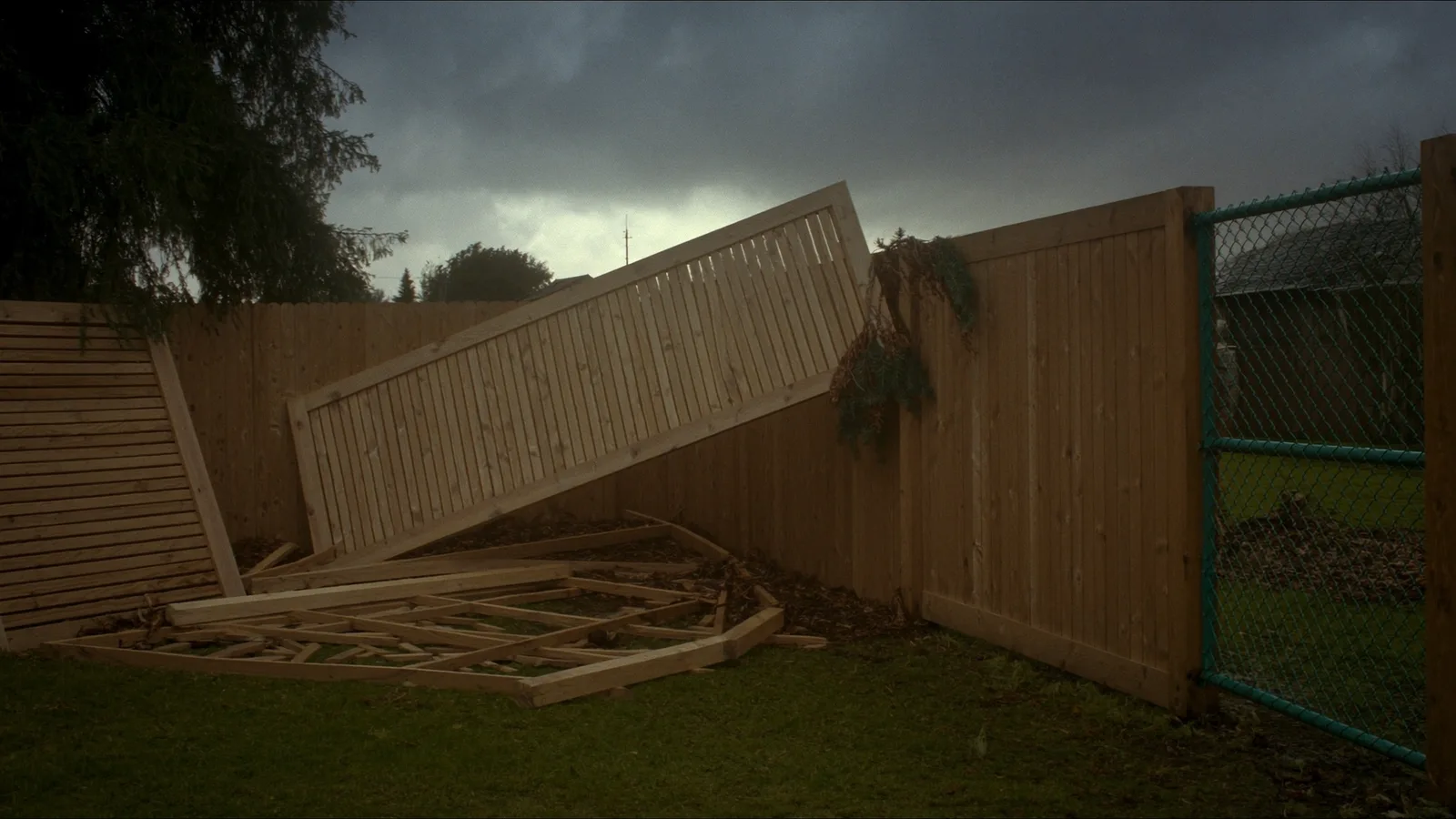
Then October through February the windstorms arrive and apply lateral load to a six-foot solid panel behaving like a sail. Posts that were already compromised give way, and the storm takes the blame. The nine damp months did the work.
Fences Fail at the Posts, Not the Panels
This is the most useful thing to understand about fence longevity in this region. Walk any older Tacoma neighborhood and the leaning fences are almost never leaning because the boards failed. They lean because a post let go.
It matters because it changes what is worth spending money on. Upgrading from standard boards to premium boards buys appearance. Upgrading from a wood post to a galvanized metal post, or simply setting a wood post over gravel with a crowned footing, buys years.
If you are choosing posts for a new install, our comparison of wood and metal fence posts covers the tradeoffs in detail.
What Actually Extends Fence Life
Drainage under the post. Several inches of compacted gravel at the bottom of the hole gives water somewhere to go instead of pooling against end grain. Highest-value item on this list, and it costs almost nothing at install time.
A crowned footing. Concrete sloped away from the post sheds water. Concrete cupped toward the post holds it. Same material, opposite outcome.
Keeping soil and bark off the boards. Raised beds, bark mulch and lawn edging piled against the bottom rail keep that wood permanently wet. Two inches of air gap at the bottom of a fence buys real time.
Clearing vegetation. Ivy and blackberry trap moisture against boards and posts and pry joints apart as they thicken.
Staining every two to three years. Worth doing, but understand what it buys. It preserves appearance and slows surface checking. It does not protect the buried post. See our guide to protecting a wood fence from PNW rain.
Repair or Replace: A Simple Test
Walk the fence line and push firmly at the top of every post.
If fewer than a third move and the boards are sound, repair. Replacing a handful of posts and re-hanging the affected panels is straightforward and considerably cheaper than a full rebuild.
If more than a third move, flex or feel soft at the ground line, replacement is usually the better spend. The economics are simple: on a fence where most posts are at end of life, you will be back doing the same repair next season and the season after, and each visit carries the same mobilization cost as the last.
The awkward middle case is a fence with excellent boards and failing posts. It feels wasteful to replace. But boards are the cheap part, and many can be reused on a rebuild if they are in good condition.
When Age Is Not the Problem
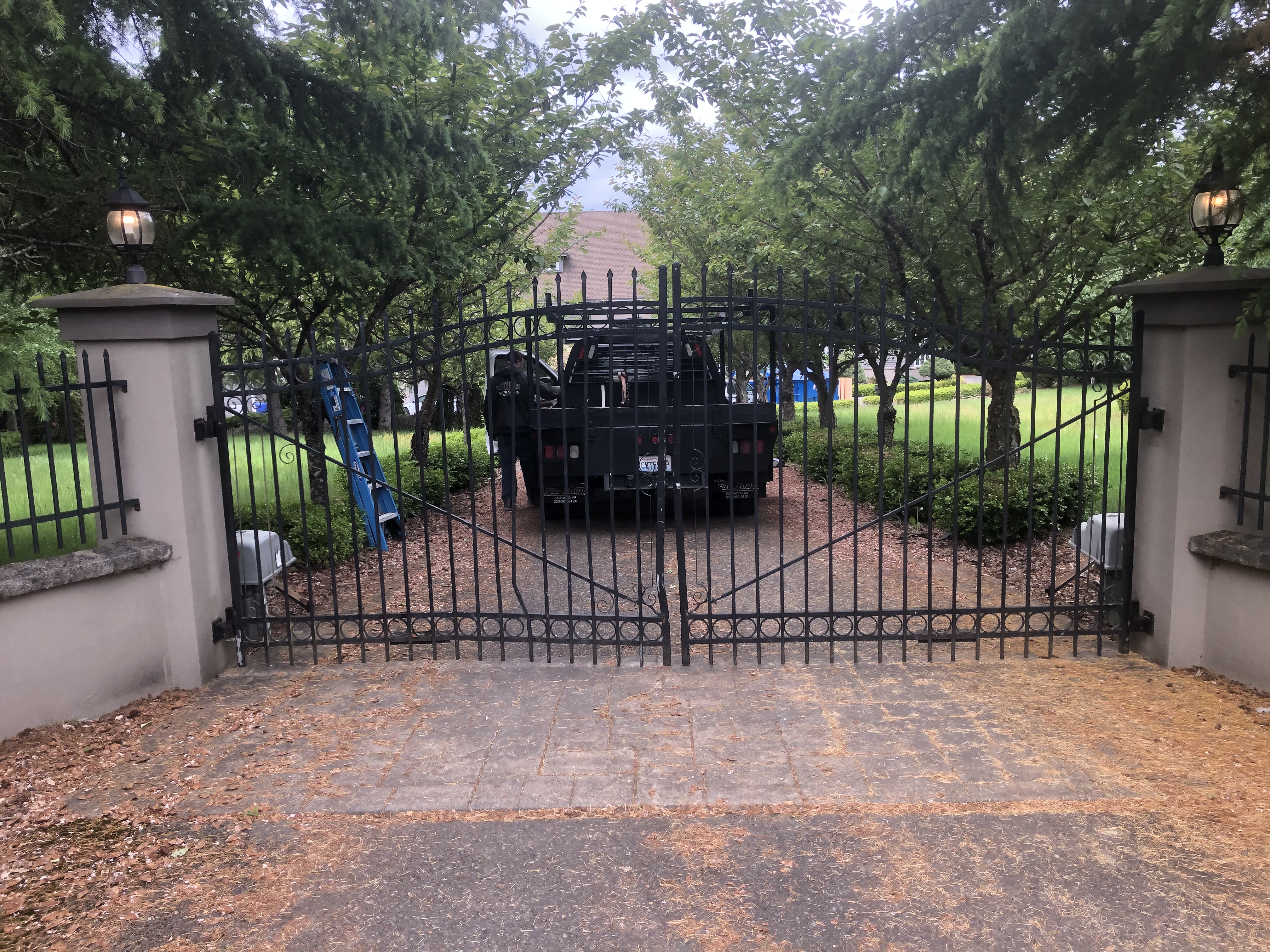
Sometimes a fence fails well before it should. The usual causes are a post set directly in a concrete cup with no drainage, a run built without accounting for slope so water sheets along the base, or gate posts sized like line posts. Gates are the highest-stress part of any fence, and undersized gate posts fail long before the rest of the run.
If your fence is under ten years old and already moving, it is worth diagnosing rather than assuming it is simply worn out.
Planning for the Long Version
If you intend to stay in the house, the calculation usually favors spending more at install on the parts you cannot see. Metal posts, proper gravel drainage and correctly sized gate posts add modest cost up front and routinely add a decade.
If you are fencing to sell, the calculation is different and appearance carries more weight.
Either way, the fence that lasts is the one built from the ground up. If you would like an honest assessment of what you already have, we are happy to walk it with you. See our fence repair services or request a free estimate.